 |
| Photo Credit: Amazon |
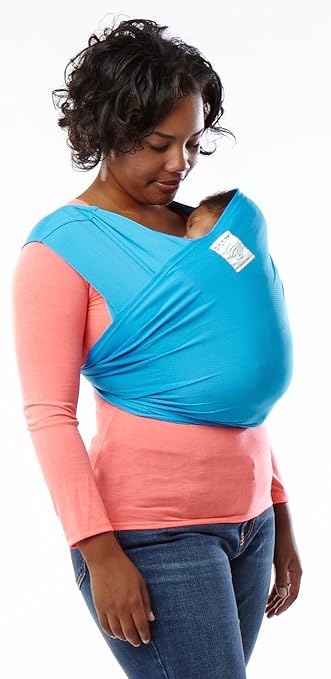
The Types of Baby Carriers
There are three types of baby carriers in the market - in Nigeria and everywhere in the World:
#1. Baby Wrap: Wrap-style baby carriers are wide piece of fabric usually worn around your body and over both shoulders. They are versatile and most can be worn in many different ways, and they are somewhat compact.
#2. Baby Slings: A sling is a wide swath of fabric worn across and over one shoulder. They come padded, unpadded, and with or without rings for adjustment.
#3. Front carrier: A front carrier consists of two shoulder straps that allows you to carry your baby in front close to your chest, though some front carriers can be used on the back when your baby becomes heavier.
Choose the Right Baby Carrier Type At-a-Glance
To help you make a quick decision about which type of baby carrier is right for you and your baby, we made you an at-a-glance decision table. See it below:
Front Carrier
|
Baby Wrap
|
Baby Slings
|
|
Disadvantages
|
#1. Some carriers don’t
blend comfortably to your body if you choose to breastfeed while
carrying your baby.
#2. Front carrier may be
too thick and bulky for your newborn.
|
#1. Wraps are not easy to wear; most people see it as a waste of
time, in that it is confusing to wear and to take off.
|
#1. All that fabric means that slings can be cumbersome,
particularly for petite women. And the one-shoulder without padding support
can quickly become uncomfortable, especially once your child weighs more than
10 to 15 pounds.
#2. Not suitable for use
with newborns - can cause suffocation, hip dysplasia and posture issues in
newborn babies they are used to carry. For more information about this, Consumer Product Safety Commission
|
Advantages
|
Front carriers that are worn on the back is more exciting for
babies and a
lot more comfortable for parents when their baby becomes heavier.
|
Wraps makes it simple for a mother who wish to breastfeed her
baby while wearing him.
|
Slings are good for breastfeeding because of the loose fit. It
enables you to breastfeed your baby without anyone noticing.
|
SUITABLE FOR:
|
For
both younger and older babies from 0 and older Babies 4 months and above.
|
Suitable
for younger babies because of its flexibility.
|
Suitable for older babies from 4 months + when babies have
stronger neck muscles, can control their necks, and are old enough for
a hip-carry position in the sling.
|
Below is the African/Nigerian Method of carrying a Baby with Both Hands Free
 |
| Mercy Johnson Strapping Baby Purity on the Back the African Way |
Advantages of Baby Carriers
Baby carrier supports bonding between a baby and the parents
Colicky in babies are managed with the use of a baby carrier
Hands free - While your baby is relaxed and enjoying your company, you are busy doing your usual house daily tasks.
You can easily move around with your baby in a crowded environment.
Safety Tips:
In 2010, the agency issued tips for safe babywearing, which include:
If your baby is younger than 4 months old, was born prematurely or at low birth weight, or has a cold or respiratory problem, consult your child's doctor before using a sling.
While wearing your baby in a sling or wrap, check on her often. Make sure she's not in a curled, chin-to-chest position and that her face isn't pressed up against the fabric or you. Both of these positions can lead to suffocation, which can happen within minutes.
In 2014 a baby died on christmas eve in mother's sling.
In 2014 a baby died on christmas eve in mother's sling.
Make sure you can see your baby's face or eyes in the sling and that your baby can see you. Unless you're nursing her, your baby's face should be visible (at or above the rim of your sling or wrap).
If you nurse your baby while wearing her, make sure that afterward you reposition her so her face is visible and at or above the rim of the sling or wrap. Her face should be away from the fabric and your body.
Related: How to Choose the Right Baby Carrier to Buy
Conclusion: Deciding on the Right-Fit Baby Carrier
So, that's it from me on how to know which type of baby carrier to buy. I hope that this article has helped you come to a decision. Thanks for reading, and if you enjoyed this post, please share it with your friends - Facebook it/ tweet it/ email it to someone.
Now, it's time to hear from you. Tell me in the comments below - which type of baby carrier will you be getting for your baby?
God bless you. Very helpful
ReplyDeleteThank you Eniola, I am glad this post was helpful to you. God Bless you too.
DeleteBefore having a baby we should plan for everything such ac; what kind of baby products we choose, what kind of baby foods is suitable for our baby and many others. Mostly new mothers are always taking the help of different types of baby carriers to carry their baby; these are available in different shapes and different sizes but the fact is what kind of baby carrier we are using; so that our baby is feeling good comfort. Here in this above article we can get some suitable points which type of baby carrier is right for our baby. I would like to take some good points from here; thanks for such a wonderful article.
ReplyDeleteBaby Products